Most buyers don’t “fail” at Sheet Metal Processing because they chose the wrong material or the wrong factory. Projects usually fail in the gray zone: unclear tolerances, missing surface expectations, incomplete assembly notes, and late-stage design changes that force a supplier to guess. Those guesses become scrap, rework, shipment delays, and awkward quality calls.
This article breaks down a repeatable way to buy sheet metal parts with fewer surprises—covering design-for-manufacturability (DFM), material and finish choices, inspection expectations, and the supplier questions that actually predict on-time, assemble-ready delivery. You’ll also find a capability snapshot and a scoring matrix you can reuse during sourcing.

If you’ve sourced enclosures, brackets, racks, cabinets, or housings, you’ve probably seen the same pattern: the first batch looks “almost right,” but assembly turns into a wrestling match. In Sheet Metal Processing, “almost right” is expensive—because the part can be dimensionally close yet functionally wrong.
The good news: you can prevent most of this with a better “spec pack” and a shared process map. That’s what the next sections are for.
A strong RFQ package does two jobs: it enables accurate quoting, and it eliminates guessing during production. For Sheet Metal Processing, the “guessing” usually happens around bends, holes, finish, and assembly. Here’s what to include so your supplier can build the part you meant—not the part they assumed.
Material choice is not just about cost—it’s about corrosion, weight, stiffness, conductivity, and appearance. If you don’t specify the grade clearly, the supplier may select an equivalent that behaves differently under bending or coating.
Saying “powder coating” is a start, not a requirement. Add what “good” looks like: color code, texture, gloss range, masking zones, allowable touch-up, and scratch/handling expectations. If your product faces customers (front panels, kiosks, visible housings), specify cosmetic zones.
Add a short line in your drawing package: “Class A surfaces: front face and top face. No visible scratches at 600 mm under normal office lighting.” That one sentence saves weeks.
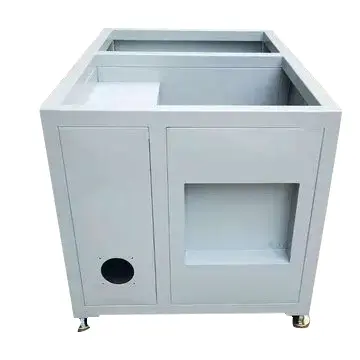
Buyers who get consistent results usually do one thing differently: they agree on the workflow before the first part is made. Below is a practical process map you can use with any supplier—including teams like Dongguan Xinyang Industrial Co., Ltd. when you’re sourcing custom racks, casings, housings, distribution boxes, or non-standard parts.
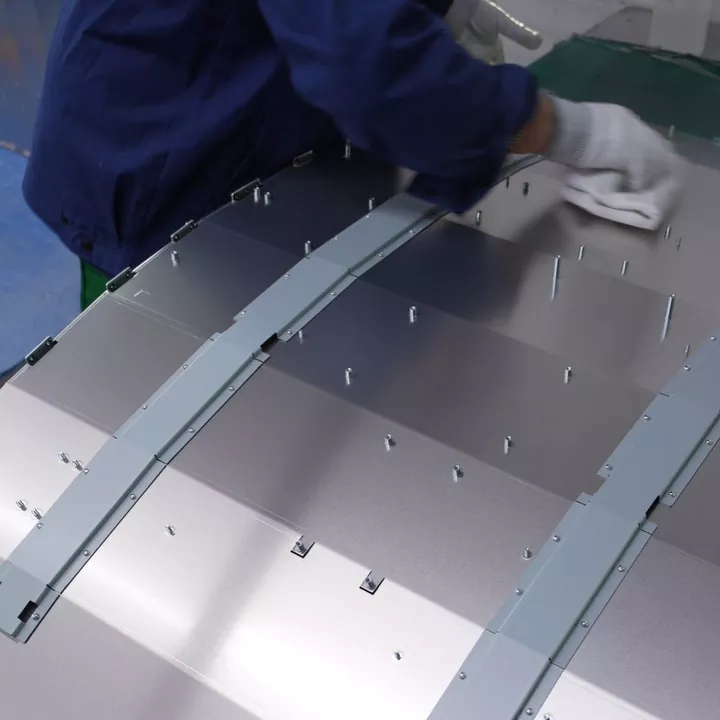
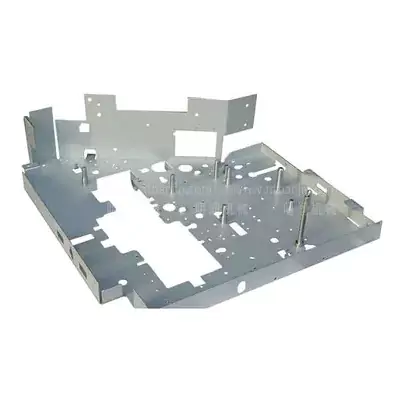
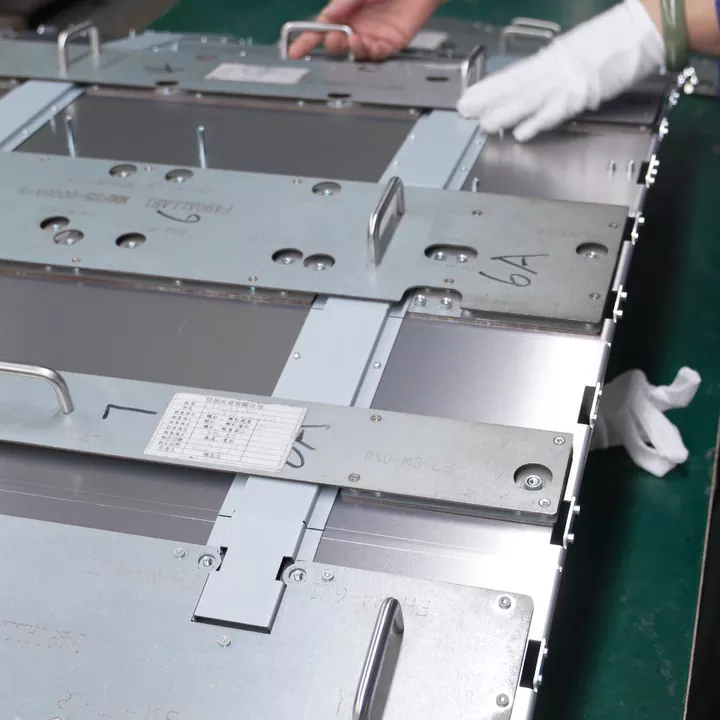
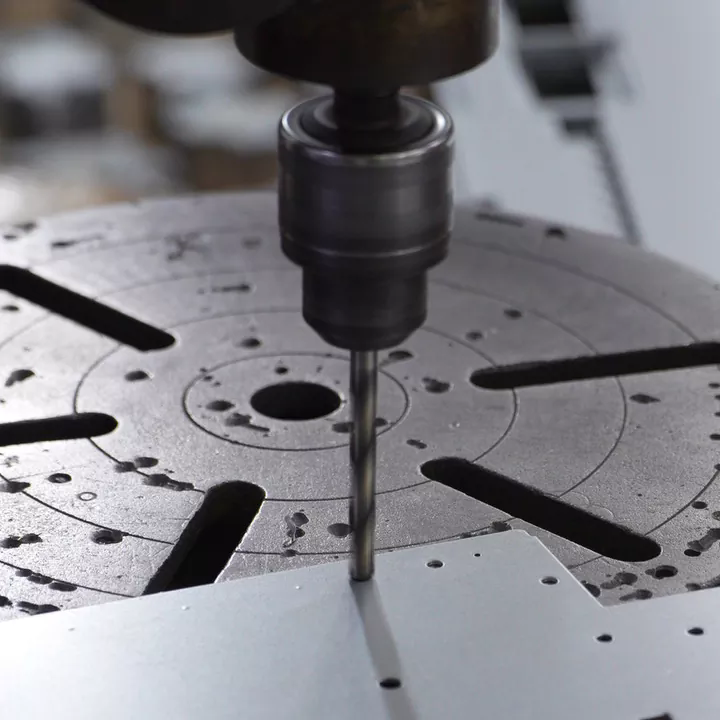
Most dimensional risk enters here. Laser cutting and punching define your hole positions; bending defines your final envelope. Ask your supplier how they control bend deduction and springback for your specific material and thickness.
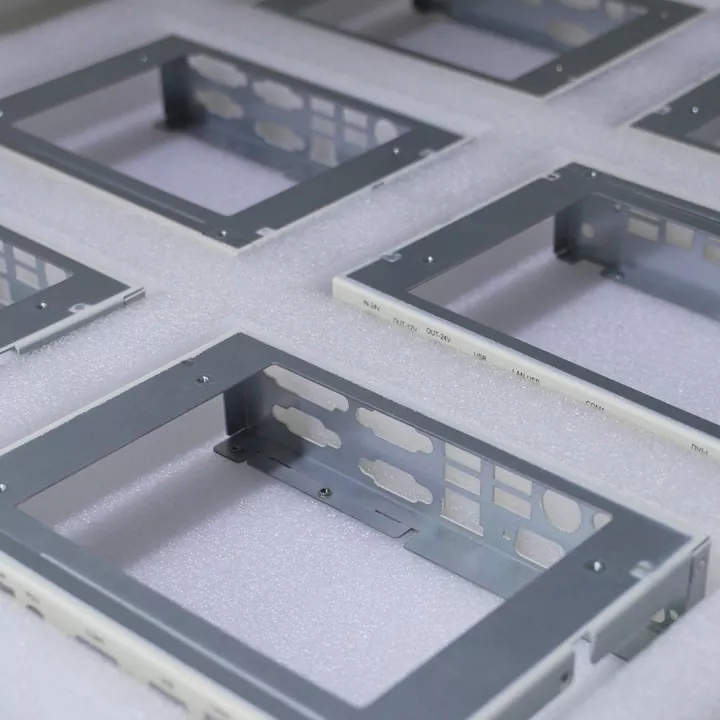
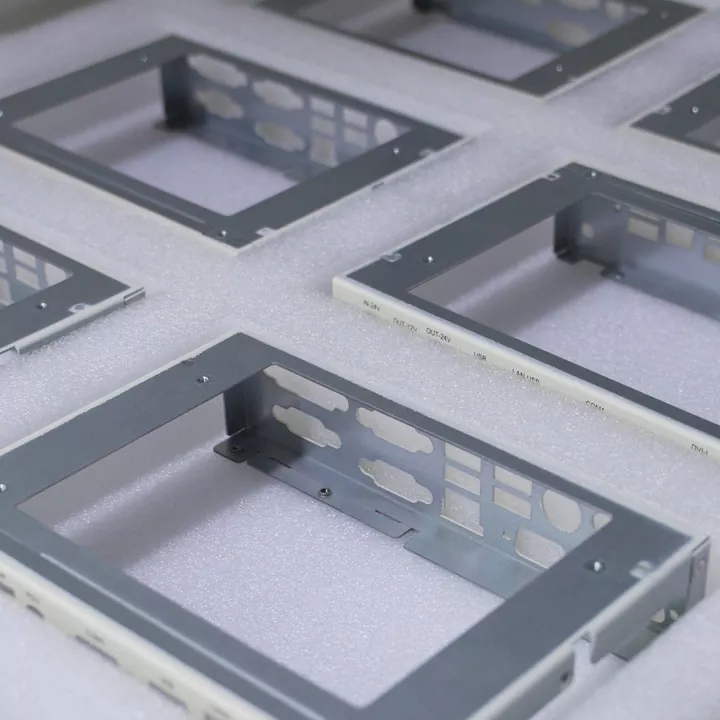
Finishing can change dimensions slightly and it can expose defects you didn’t notice on raw metal. Plan masking, grounding points, and inspection after finishing. Packaging should match the cosmetic requirement (especially for Class A surfaces).
Final inspection should reference the 2D drawing and the agreed acceptance criteria. For first builds, a first-article inspection (FAI) report reduces disputes and accelerates approval.
Capability tables are useful when you treat them as a starting point—not a guarantee. Geometry, part size, bend count, and finish requirements can change what’s realistic. Still, it helps to have a baseline when discussing Sheet Metal Processing requirements.
| Item | Typical range / note | Why it matters to buyers |
|---|---|---|
| Sheet thickness | 0.8 mm – 6.0 mm | Impacts stiffness, bend radii, fastener selection, and finish durability. |
| Max processing size | Up to 2500 mm × 1250 mm | Affects enclosure panels, racks, cabinets, and large covers without splicing. |
| Bending accuracy | About ±0.2 mm (depends on geometry) | Critical for door alignment, sealing interfaces, and assembly fit. |
| Hole accuracy | About ±0.1 mm (depends on feature type) | Prevents misaligned screws, rivet nuts, and connector cutouts. |
| Surface options | Powder coating, painting, electroplating, oxidation, screen printing | Controls corrosion resistance and cosmetic appearance in the end market. |
| Core processes | Laser cutting, stamping, bending, welding, riveting | Defines achievable complexity, throughput, and total cost structure. |
Tip: If you need tighter tolerances or demanding cosmetics, ask for a “process plan” plus measurement points (not just a quote).
“We do QC” is not enough. You want to know where quality is checked, what gets recorded, and how issues are contained. In Sheet Metal Processing, quality is less about catching defects at the end and more about preventing drift during cutting, bending, and finishing.
If you’re managing overseas procurement, ask for a simple quality packet: FAI report (for first lot), key dimension measurement records, finish confirmation (color/texture), and photos of packaging. That’s usually enough to prevent “we shipped it already—surprise!” moments.
When buyers say “sheet metal is too expensive,” the issue is often not the supplier—it’s the design and finish choices that create slow cycles. Here are the levers you can pull without sacrificing performance.

If you want consistent Sheet Metal Processing results, choose suppliers using a repeatable scoring system. Below is a simple matrix you can copy into your RFQ evaluation.
| Category | What “good” looks like | Questions to ask | Weight (example) |
|---|---|---|---|
| DFM capability | Proactive suggestions; identifies tolerance stack and finish risks early | “Can you return a DFM note list with the quote?” | 20% |
| Process coverage | Cutting + bending + joining + finishing + assembly options | “Which steps are in-house vs. outsourced?” | 15% |
| Quality system | FAI available; in-process checks defined; clear defect containment | “What’s your FAI process and typical measurement report format?” | 25% |
| Communication | Fast, specific answers; confirms assumptions; shares photos/records | “Who owns engineering questions and turnaround time?” | 15% |
| Lead time reliability | Transparent schedule; realistic dates; packaging discipline | “How do you protect Class A surfaces in transit?” | 15% |
| Cost stability | Clear cost drivers; suggestions to reduce total cost | “What design changes would cut cost without hurting function?” | 10% |
If a supplier wins only on price but loses on DFM, quality, and communication, you’ll often pay the difference in rework and delays.
Send a 3D model + 2D drawing, material grade, thickness, finish spec (with acceptance criteria), target quantity/forecast, and notes for hardware/assembly/packaging. If a surface is cosmetic, label it. If a feature is critical-to-function, flag it.
Identify datums and critical interfaces, avoid over-constraining every dimension, and ask your supplier to review tolerance stacking. For welded frames, request a fixture plan or sequence note, plus measurement points after welding and after finishing.
It depends on environment and cosmetic needs. Powder coating is popular for durability and consistent appearance, plating can support conductivity needs, and oxidation (anodizing) is common for aluminum aesthetics. The key is to define acceptance criteria—color, texture, masking, and cosmetic zones—so the finish is measurable.
Yes—starting with prototypes or small batches is a smart way to validate fit, finish, and assembly. Ask for an FAI report on the first run so approvals are based on measured evidence.
Lock your drawing revision control, agree on a process map, require pre-production confirmation of assumptions, and ask for photo evidence of key stages (bending, hardware, finish, packaging). Stable communication often matters as much as machine capability.
If your next enclosure, rack, cabinet, or custom part can’t afford surprises, treat Sheet Metal Processing like a managed process—not a commodity.
You can use the scorecard above, tighten your RFQ package, and align on inspection and finish acceptance before the first cut is made. Teams at Dongguan Xinyang Industrial Co., Ltd. and similar manufacturers typically move fastest when buyers provide clear functional intent, cosmetic zones, and assembly details from day one.
Ready to move from “quote-first” to “right-first”? contact us with your drawings, target quantity, and finish requirements— and let’s turn your next build into a smooth, boring (in the best way) delivery.