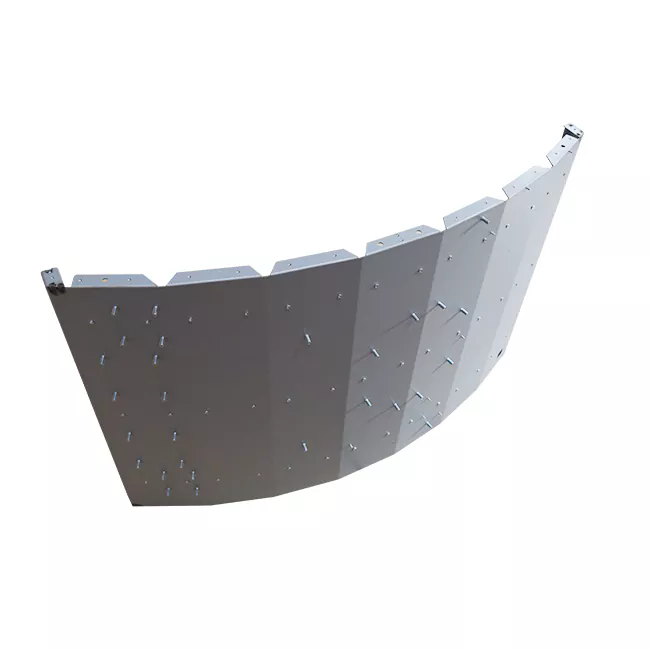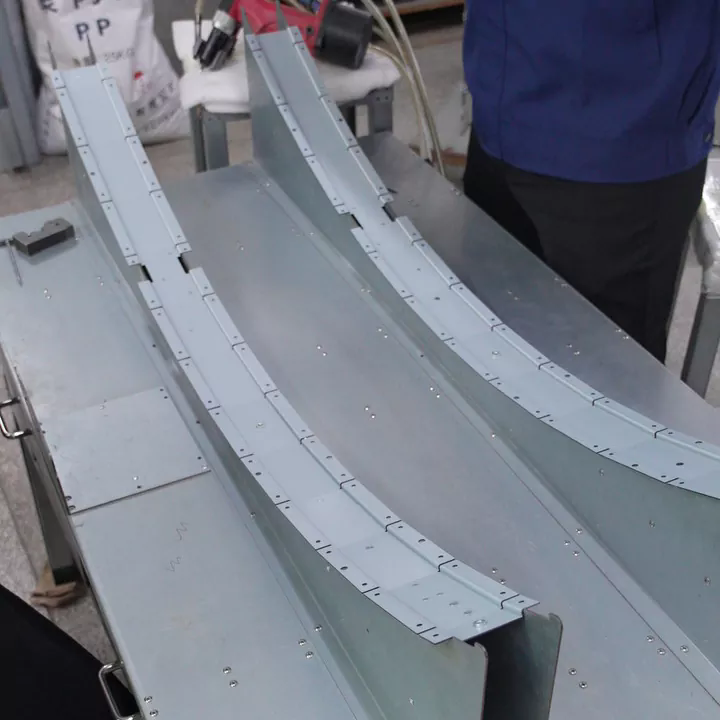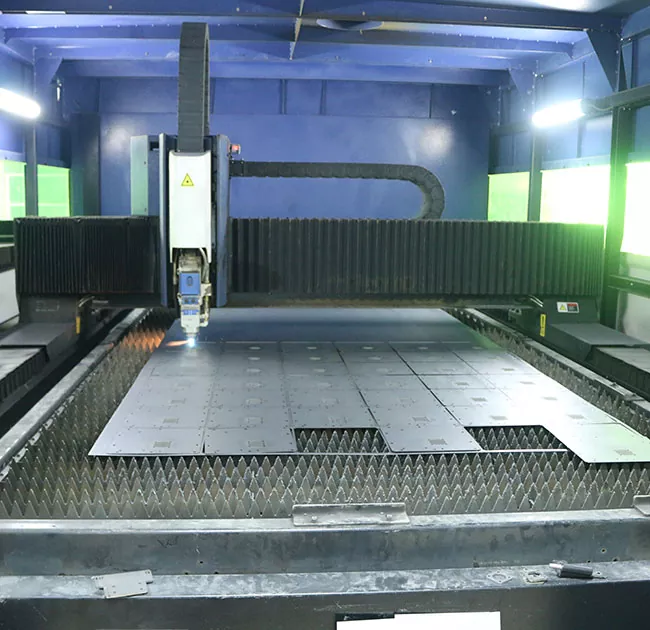
Curved sheet metal processing is a specialized manufacturing discipline focused on transforming flat metal sheets into precise curved geometries used in industrial, architectural, transportation, and energy applications. This article explains how the process works, the core forming technologies involved, key material considerations, common production challenges, and quality control methods. It also explores real-world applications and how professional fabrication ensures dimensional accuracy, structural stability, and surface integrity in complex curved components.
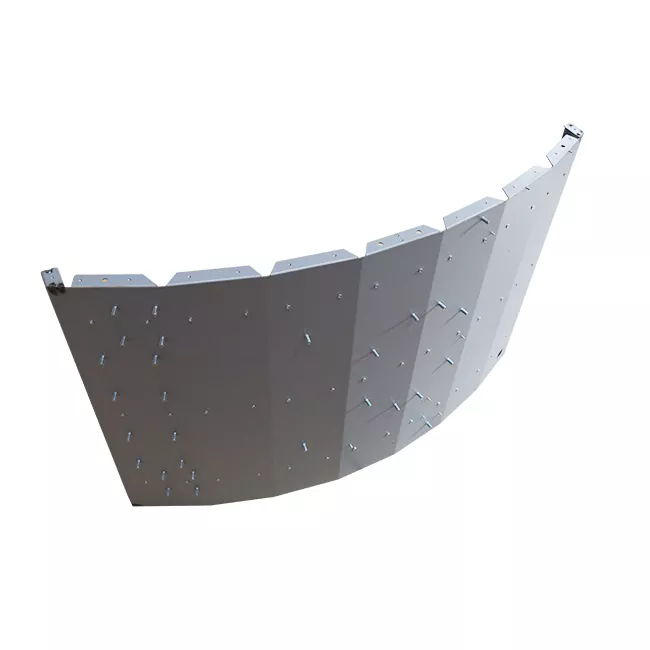
Curved sheet metal processing is widely used in industries where strength, aesthetics, and aerodynamic performance are critical. Unlike flat sheet fabrication, curved metal forming requires controlled deformation techniques that prevent cracking, wrinkling, or springback. Manufacturers must balance material behavior, tooling precision, and forming force to achieve stable and repeatable curved structures.
From aerospace fuselage panels to architectural façade systems and industrial enclosures, curved sheet metal parts are essential in modern engineering. However, achieving consistent curvature across large production batches remains a technical challenge that demands advanced machinery and engineering expertise.
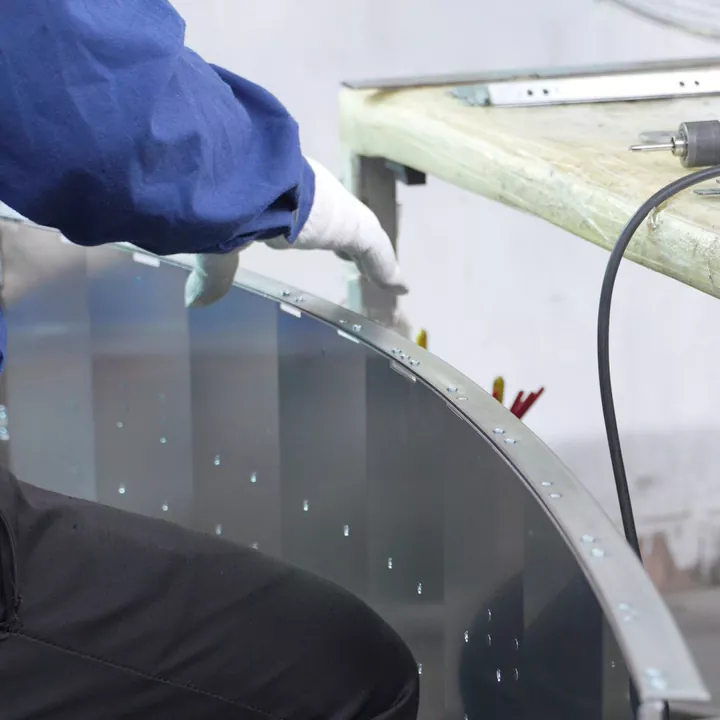
Curved sheet metal processing refers to a series of controlled mechanical operations that reshape flat metal sheets into single or compound curved geometries. The process may involve rolling, pressing, stretching, bending, or hydroforming depending on design requirements and material properties.
The objective is to achieve precise curvature without compromising structural integrity or surface finish. This makes it essential for industries requiring high-performance components with both functional and aesthetic demands.
Several core processes are used in curved sheet metal fabrication. Each method is selected based on geometry complexity, material type, and production volume.
Each method offers different advantages in terms of cost, precision, and production speed. In industrial practice, hybrid approaches are often used to achieve optimal results.
Material behavior plays a crucial role in curved sheet metal processing. Different metals respond differently to stress, heat, and deformation forces.
Key factors such as yield strength, elongation rate, and thickness uniformity directly affect the final curvature quality and must be carefully evaluated before production.
| Technique | Best For | Precision Level | Cost Efficiency | Production Speed |
|---|---|---|---|---|
| Roll Forming | Large radius curves | Medium | High | High |
| Press Braking | Segmented curves | Medium | High | Medium |
| Stretch Forming | Aerospace panels | High | Medium | Low |
| Hydroforming | Complex geometries | Very High | Low | Low |
| CNC Bending | Precision parts | Very High | Medium | High |
Despite technological advancements, curved sheet metal processing still presents several engineering challenges:
These issues can lead to production delays, increased costs, and reduced structural performance if not properly controlled.
Modern manufacturing addresses these challenges through advanced process control and simulation technologies.
These methods significantly improve consistency and reduce material waste while maintaining tight tolerances.
Curved sheet metal components are used across a wide range of industries:
Each application requires a different balance of strength, weight, and aesthetic performance.
Precision in curved sheet metal processing directly affects product performance and lifecycle reliability. Even minor deviations in curvature can result in structural stress concentration, assembly misalignment, or aerodynamic inefficiency.
High-precision fabrication ensures:
Dongguan Xinyang Industrial Co., Ltd specializes in advanced curved sheet metal processing solutions for global industrial clients. With precision CNC equipment, experienced engineering teams, and strict quality inspection systems, the company delivers customized curved metal components tailored to complex design requirements.
The manufacturing capability covers prototyping, small batch production, and large-scale industrial supply, ensuring flexibility across different project scales. Continuous process optimization allows stable curvature accuracy and consistent product quality across diverse materials and geometries.
Q1: What materials are most suitable for curved sheet metal processing?
Aluminum, stainless steel, and carbon steel are most commonly used due to their balance of strength, ductility, and availability.
Q2: What causes springback in metal forming?
Springback occurs when internal stresses in the metal cause it to partially return to its original shape after deformation.
Q3: Can complex curved shapes be mass-produced?
Yes, with CNC systems and hydroforming technology, complex geometries can be consistently reproduced at scale.
Q4: How is precision ensured in production?
Precision is maintained through digital simulation, automated CNC control, and laser-based measurement systems.
Q5: Is curved sheet metal processing expensive?
Cost depends on complexity, material type, and production volume. Advanced methods may increase initial cost but reduce long-term waste and rework.
Curved sheet metal processing is a critical capability in modern manufacturing, enabling the creation of durable, lightweight, and structurally optimized components. By combining advanced forming technologies with precise engineering control, manufacturers can achieve high-performance results across a wide range of industries.
For customized curved sheet metal solutions, Dongguan Xinyang Industrial Co., Ltd provides professional engineering support and manufacturing services tailored to your project requirements. For more details and collaboration opportunities, please contact us today.